QUALITY
Quality that is checked, from the vineyard to the pallet.
Table grapes from Kavala, Greece, with four certifications renewed every year, residue analyses by an accredited laboratory and a cold chain from packing to loading.
CERTIFICATIONS
Four standards, audited every year.
All four certifications were renewed in 2026. Each standard is audited every year by an independent certification body.
-
IN THE VINEYARD
GLOBALG.A.P. Integrated Farm Assurance (IFA) for fruit and vegetables
The international standard for good agricultural practice on the farm.
- Food safety and traceability
- Plant protection products and integrated pest management
- Fertilisers, water, waste and biodiversity
- Workers' health, safety and welfare
Renewed in 2026 · valid until 21 July 2027 Certification body: Q-CERT
-
PEOPLE
GRASP GLOBALG.A.P. Risk Assessment on Social Practice
A GLOBALG.A.P. add-on that assesses social practices on the farm.
- Workers' voice and representation
- Information on human and labour rights
- Terms of employment, wages and working hours
- Protection of children and young workers
Renewed in 2026 Assessed every year, together with the GLOBALG.A.P. audit
-
WATER
SPRING Sustainable Program for Irrigation and Groundwater Use
A GLOBALG.A.P. add-on for responsible water management on the farm.
- Assessment of water risks
- Legal compliance of water use
- Management and use of water resources
- Protection of water sources
Renewed in 2026 Audited every year, together with the GLOBALG.A.P. audit
-
IN THE PACKING HOUSE
IFS Food International Featured Standards
A standard for food safety and quality, recognised by the GFSI.
- Product safety and quality
- Sorting and packing processes
- Compliance with the law and customer specifications
- Traceability and authenticity
Renewed in 2026 Audited every year
We send the current certificates to any buyer who asks for them. The names of the standards are trademarks of their owners.
THE CHECKS, STEP BY STEP
Five checkpoints, from the vineyard to the truck.
- 01
In the vineyard
Quality is the responsibility of the company's agronomist, who is licensed to prescribe plant protection products. Her work starts in the vineyard.
- 02
Before harvest
Samples from every grower are analysed for pesticide residues. Picking starts once the sugar content meets the minimum of the EU standard.
- 03
Intake
Every batch is recorded when it arrives at the packing house, with its grower and field.
- 04
Sorting and packing
Every bunch is checked and cleaned on the three sorting lines. Weight is checked at 100 workstations with scales.
- 05
Cooling and loading
Pallets are pre-cooled, held in the cold rooms and loaded onto refrigerated trucks from two docks.
RESIDUE ANALYSES
Three analyses before the grapes leave.
The grapes are analysed for pesticide residues before harvest, per grower and per batch. Each batch is checked against the EU maximum residue levels, Regulation (EC) No 396/2005, and against the customer's specifications.
The analyses are carried out by Veltia Labs for Life in Thessaloniki. The laboratory is accredited to ISO/IEC 17025 by ESYD, the Hellenic Accreditation System, and is a QS-approved laboratory for pesticide residues in fruit and vegetables.
- Before harvesta sample from the vineyard, before picking
- Per growerevery grower is tested separately
- Per batchevery batch that is packed
COLD CHAIN
Cold from packing to loading.
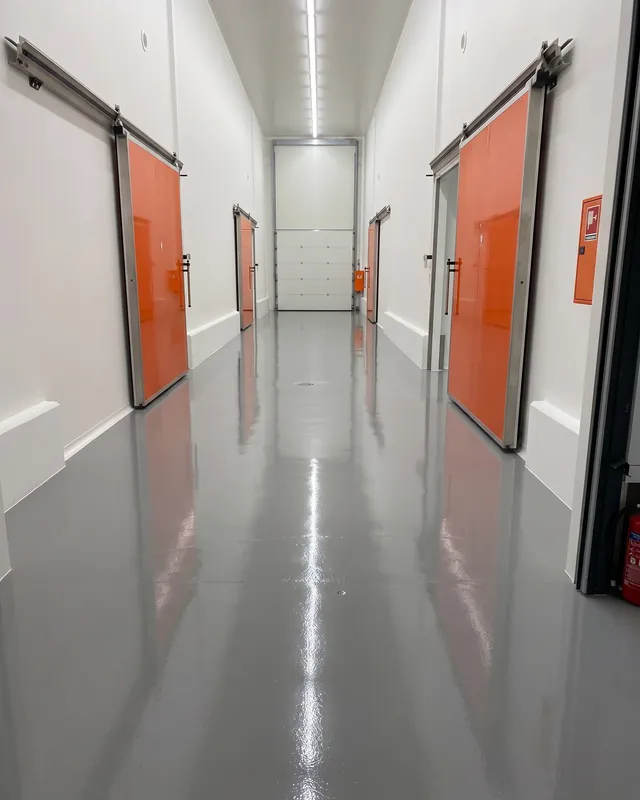
Grapes lose water quickly after picking: the stem dries and browns, and the berries soften. A constant low temperature and high humidity keep them fresh all the way to the shelf.
- Storage temperature
- −1 to 0 °C
- Relative humidity
- 90–95%
- Cold rooms
- 8
- Loading docks
- 2
Temperature and humidity: the conditions recommended for table grapes by the Postharvest Research and Extension Center, University of California, Davis.
Traceability by batch
Every batch is tracked from the field to the pallet. For each pallet we load, we know which grower and which field the grapes came from.
Customer specifications
Berry size, sugar content and pack format are agreed with each customer for each batch, and we pack under the customer's own label. The minimums are set by the EU marketing standard.
See the varietiesFREQUENTLY ASKED QUESTIONS
What buyers ask.
Can I see the certificates?
Yes. We send the current GLOBALG.A.P., GRASP, SPRING and IFS Food certificates to any buyer who asks for them.
How often are the certifications renewed?
Every year. All four were renewed in 2026, and the GLOBALG.A.P. certificate is valid until 21 July 2027.
Where are the residue analyses carried out?
At Veltia Labs for Life in Thessaloniki, a laboratory accredited to ISO/IEC 17025. Analyses are carried out before harvest, per grower and per batch.
At what temperature are the grapes kept?
At −1 to 0 °C with 90–95% relative humidity, as recommended internationally for table grapes.
Do you pack under our own label?
Yes. We pack in the format each customer asks for, under their own label: punnets, bags, loose in carton or net bags.
Who is responsible for quality?
Anastasia Mintzili, an agronomist licensed to prescribe plant protection products. She is responsible for quality, from the vineyard to packing.